A common injury among climbers
Fingers account for approximately 52% of all climbing injuries (Keegan et al., 2020). This high prevalence is explained by the elevated mechanical loads placed on the digital structures, particularly during holds that require significant finger flexion.
What is a finger pulley?
Pulleys are ligamentous structures that form fibrous sheaths along the fingers. Their role is to keep the flexor tendons close to the bone and prevent a “bowstring” effect during finger flexion.
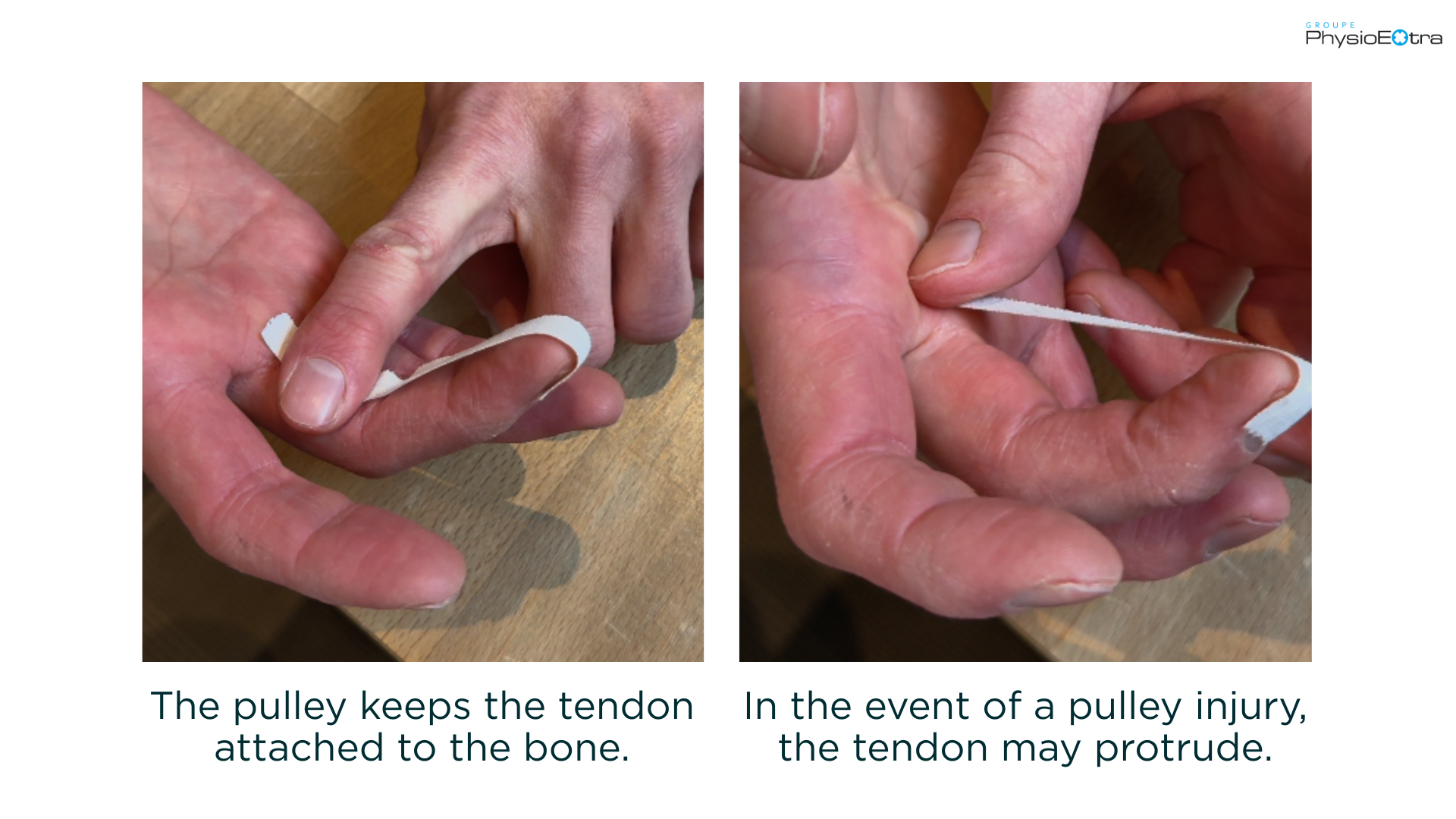
In climbing, the A2 and A4 pulleys, located at the proximal and middle phalanges, are the most stressed. They are essential for force transmission and finger stability.
How do you know if you have a pulley injury in climbing?
Climbers often describe the onset of injury as a sudden “pop” sound or sensation occurring during effort. This sensation is generally followed by immediate pain and finger swelling.
Persistent pain when gripping, decreased grip strength or visible tendon deformity during flexion may also suggest a pulley injury.
What are the symptoms of a finger pulley rupture?
Symptoms vary depending on the severity of the injury, but frequently include sharp pain, swelling, local tenderness and sometimes bruising. A reduced ability to load the finger is often present.
In some cases, a rupture may lead to a phenomenon called bowstringing, which is a visible protrusion of the tendon during finger flexion.
How do I know if I have damaged a tendon in my finger?
A tendon injury may be suspected when pain is accompanied by loss of movement, inability to fully bend or straighten the finger, or marked weakness. Significant inflammation of surrounding structures may also cause considerable swelling and intensify symptoms.
How do you treat a finger pulley injury?
Treatment of pulley injuries is usually conservative, except when two or more pulleys are completely ruptured. In the acute phase, recommendations include relative rest, ice application and the use of anti inflammatory medication.
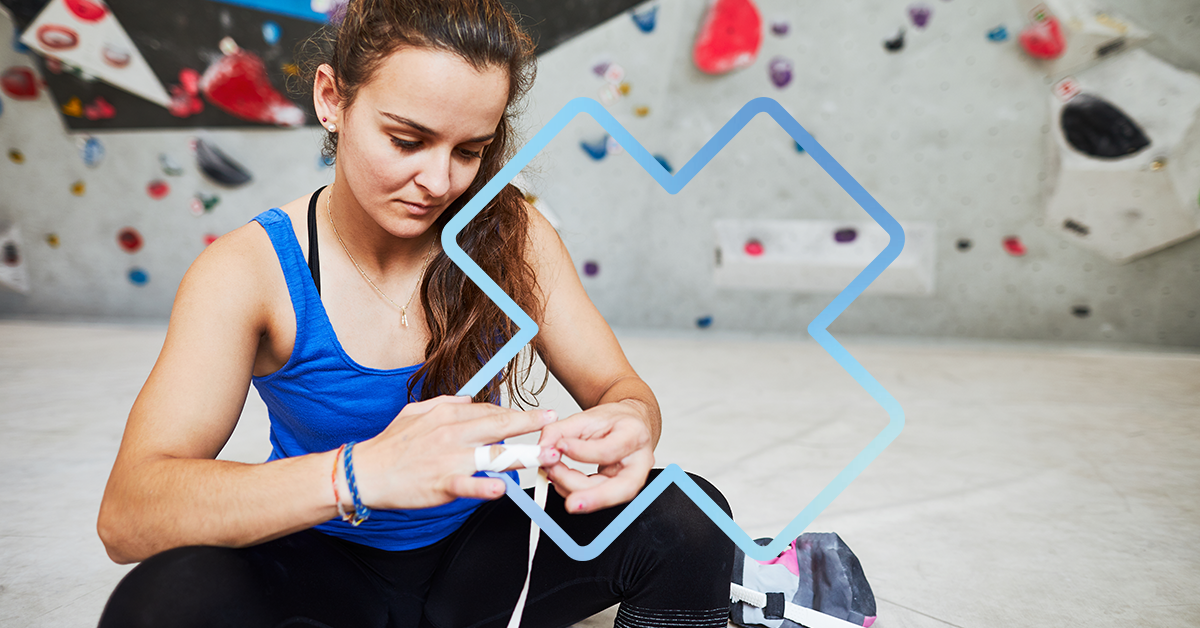
Taping is frequently used to support the injured pulley, decrease the load applied and reduce the risk of recurrence.
Rehabilitation is based on a gradual return to loading. Controlled mechanical stress is essential to promote ligament and tendon adaptation and improve their tolerance to strain. Return to climbing should be progressive, starting with low intensity routes, with particular attention to load management, technique and movement variety to support long term recovery. Consult a physiotherapist familiar with this type of injury.
Other common climbing injuries
Elbow and forearm
Elbow and forearm injuries account for approximately 9.1% of climbing injuries. “Climber’s elbow” is associated with pronated grips combined with elbow flexion, which generate significant stress on the forearm muscles. Medial and lateral epicondyle tendinopathies are also common. Treatment is generally conservative and includes rest, ice, anti inflammatory medication and eccentric strengthening.
Shoulder
The shoulder is the second most affected region after the hand, accounting for approximately 17.2% of injuries. Injuries are mainly related to overuse and include rotator cuff injuries, impingement syndrome, biceps tendinopathy and certain labral lesions. Repetitive overhead arm work combined with muscle imbalance increases the risk of overload.
Spine
Spinal injuries represent between 1.9% and 7.1% of injuries. A characteristic posture called “climber’s back,” marked by increased thoracic kyphosis, lumbar lordosis and shoulder protraction, may develop over time. This posture is associated with chronic back pain and can be prevented through regular stretching and targeted strengthening exercises.
Foot
Foot injuries are often related to wearing very tight climbing shoes, which may contribute to various conditions such as plantar fasciitis, metatarsalgia or hallux valgus.
Knee
At the knee level, certain techniques such as the “drop knee” place high stress on the joint and increase the risk of meniscal or ligament injuries.
Prevention and rehabilitation principles
Prevention relies on proper mechanical stress management, including adapting route intensity, varying grip types and incorporating relative rest. In rehabilitation, progression should be gradual, starting with low loads, regular stretching and strengthening of antagonist muscles.
Are you experiencing finger pain or suspect a climbing related injury? The professionals at PhysioExtra can support you with a personalized assessment and a treatment plan tailored to your practice for a safe return to the climbing wall.