How does walking naturally develop in children?
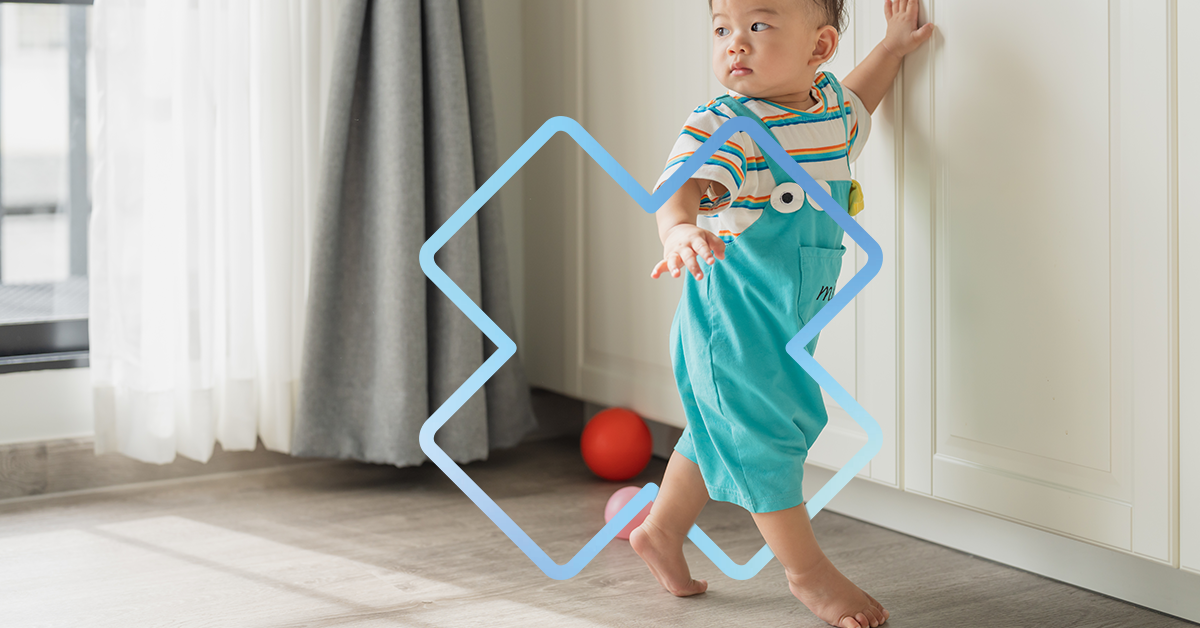
Independent walking usually begins between 10 and 18 months of age, with most children starting between 12 and 14 months. Regardless of when walking begins, early steps tend to follow a similar pattern.
- At first, children walk with their feet wide apart, toes turned outward, a broad base of support, and arms raised. Their legs are fairly stiff, and falls are frequent but usually not associated with injury.
- After a few weeks, the feet move closer together, stability improves, and walking speed increases.
- About three months after walking begins, the arms lower and the child can carry objects while walking.
- After about six months of independent walking, the heel begins to contact the ground first.
- Around 18 months, the child can step over small obstacles and play in a squatting position.
- It is only around age 3 that a child’s gait starts to resemble that of an adult, and gait development continues until approximately age 8.
What is an atypical gait in children?
An atypical gait refers to a walking pattern that differs from typical norms, either in the timing of its appearance or in its quality. Since each child develops at their own pace, it can be difficult to determine whether a gait variation is normal or requires further evaluation.
The most commonly observed gait variations include feet turned inward or outward, walking on tiptoes, and flattening of the foot arch inward.
What is the role of a pediatric physiotherapist?
A pediatric physiotherapist assesses the child to determine the exact cause of the observed gait. They can determine whether the gait falls within normal limits or if intervention is needed.
If required, the physiotherapist may recommend exercises to be done in the clinic and at home to address the issue and may refer the child to a medical specialist such as a neurologist, physiatrist, or orthopedic specialist.
Walking on tiptoes: should you be concerned?
It is completely normal for a child to occasionally walk on their tiptoes, particularly to explore their environment or reach for an object. This behaviour is not concerning when it occurs occasionally.
In two-year-old children, a phase of tiptoe walking may occur, but it should not represent the majority of the time and should not last longer than three to six months.
When a child walks on their tiptoes more than 50% of the time or adopts this posture before walking independently, a consultation in pediatric physiotherapy is recommended to identify the underlying cause.
Why do some children walk on their tiptoes?
Several factors can explain this walking pattern, including tight calf muscles, sensory integration difficulties, or more rarely, a neurological condition such as cerebral palsy.
Approximately one third of children with autism spectrum disorder may walk on their tiptoes. However, this sign alone is not sufficient to establish a diagnosis.
In many cases, the cause remains unknown, and the child does not present with any other associated condition.
Feet turned inward or outward
In-toeing gait (pigeon-toed gait)
During the first three months of walking, it is common for one or both feet to turn inward. This usually resolves on its own as the child’s stability improves.
If the gait persists after three months of independent walking, a pediatric physiotherapy assessment can help determine the cause and recommend appropriate exercises or postural adjustments.
Out-toeing gait (duck walk)
In infants who are just beginning to walk, feet turned outward are common and part of normal development. As muscle strength improves, gait typically normalizes over time.
A consultation is recommended if the gait remains asymmetrical or persists several months after walking begins.
Flat feet and heel collapse
Between 90% and 97% of two-year-old children have flat feet without a visible arch. This is part of normal development. The arch gradually forms starting around age three and continues developing until approximately age ten.
Consultation is not necessary if the child does not experience pain. However, asymmetrical collapse, motor delays, or frequent falls may warrant an evaluation in pediatric physiotherapy.
Orthotics, boots, or barefoot?
Foot orthotics and supportive boots are not recommended without a prior assessment. Studies do not show that they promote the development of the foot arch.
Being barefoot allows children to explore different textures, better feel their muscles, and naturally strengthen their feet, ankles, and toes. When shoes are required, it is preferable to choose a flexible shoe that closely mimics barefoot walking.
When should you consult a pediatric physiotherapist?
- If the child is not yet walking independently but is almost always on their toes when standing while holding onto furniture.
- If the child is not walking independently without support by 16 months.
- If the arch and heel collapse when standing and the child also shows a motor delay, for example if they are not taking a few independent steps by 16 months.
- If the collapse of the arch or heel is asymmetrical (only one foot compared to the other).
- If the child complains of specific foot pain while also having a collapsed arch.
- If the child walks on their toes more than 50% of the time when standing.
- If the child continues to walk with one or both feet turned inward or outward 3 months after starting to walk independently.
- If the child was walking normally with feet aligned straight and suddenly begins walking with one foot turned inward or outward.
- If the child continues to fall frequently after 6 months of independent walking.
- If the child had previously achieved motor milestones (such as running or jumping) and suddenly has difficulty performing them or can no longer do them.
In cases of sudden limping, significant pain, refusal to bear weight on one leg, or the presence of a red or swollen joint, medical consultation should be prioritized.
If you have concerns about your child’s gait, an evaluation in pediatric physiotherapy can provide reassurance and guidance. Book an appointment at a PhysioExtra clinic to receive advice tailored to your child.