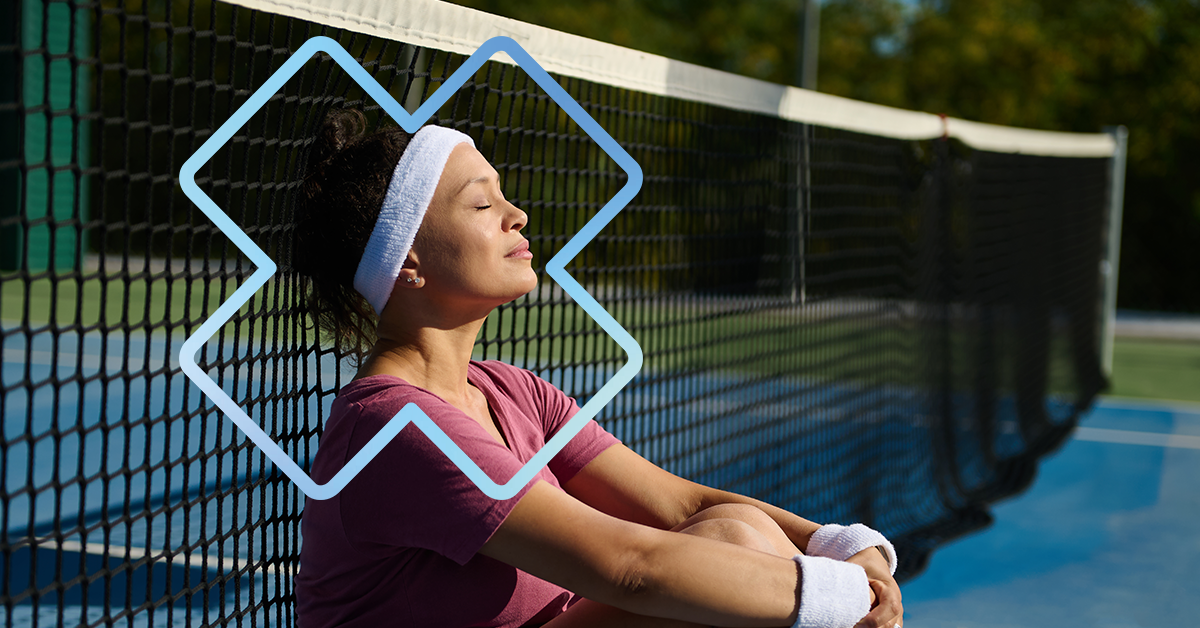
Mental health in sport: an essential issue
Mental health plays an essential role in the lives of people who practice sports, regardless of their age or level. It is therefore important to examine this issue in order to take preventive action with athletes, while ensuring that sport remains a protective factor rather than a risk factor.
To better understand athletes’ realities, it is useful to distinguish three types of practice.
- Recreational sport is mainly oriented toward enjoyment, relaxation and socialization, without performance pressure (Eime et al., 2013).
- Competitive sport takes place in a more structured setting, with training, competitions and progression goals (Fraser-Thomas, Côté & Deakin, 2005).
- Elite sport requires a very high level of commitment, with professional support and high-level competitions (Reardon et al., 2019).
Although athletes are often perceived as having strong coping abilities, they experience normal reactions related to the demands of their sport, such as stress, pressure or performance concerns (Rice et al., 2016; Sagar & Stoeber, 2009). These reactions are not signs of weakness, but rather responses to a demanding environment.
Mental health directly influences performance and perseverance. Athletes who develop strategies to manage their stress (e.g. deep breathing, mindfulness), recognize their limits and rely on a supportive environment tend to progress more consistently and maintain their engagement (Birrer, Röthlin & Morgan, 2012; Isoard-Gautheur et al., 2015). Taking care of mental health therefore contributes both to well-being and to the enjoyment of practicing sport.
Main psychological challenges experienced by athletes
Throughout their journey, athletes face different psychological challenges.
Performance pressure, whether it comes from oneself, coaches, parents or the sports environment, can increase stress and fear of disappointing others or making mistakes (Sagar & Stoeber, 2009). This reality is frequent, particularly among youth in competitive contexts.
Performance anxiety is also common. It can manifest through persistent worries, physical tension or difficulty concentrating, and can affect both daily life and sports performance (Rice et al., 2016).
Injuries are another important challenge, both physically and psychologically. They can lead to a loss of reference points, decreased self-confidence and concerns related to returning to competition. Some individuals may also feel isolated, lose part of their identity linked to sport or experience difficult emotions during rehabilitation (Wiese-Bjornstal et al., 1998).
Burnout can appear when demands exceed the athlete’s resources. It is characterized by significant fatigue, a loss of enjoyment and a reduced sense of accomplishment, which can lead to disengagement (Gustafsson et al., 2017; Isoard-Gautheur et al., 2015). This phenomenon is often linked to prolonged stress and an imbalance between demands and available resources. In addition, the stigma still associated with mental health can lead some athletes to hesitate to seek help, which may worsen their difficulties.
Special case of tennis and individual sports
Some psychological challenges may be even more present in individual sports such as tennis. Unlike team sports, the athlete is alone on the court and fully responsible for their performance. This can increase pressure, fear of making mistakes and negative thoughts, especially during more difficult moments. The literature also reports that athletes involved in individual sports may be more vulnerable to performance anxiety and higher personal pressure (Nixdorf et al., 2013; Rice et al., 2016).
Being alone during matches can also limit immediate support and increase feelings of isolation. In addition, breaks between points can leave room for thoughts that sometimes become overwhelming (for example: “I am not good”, “I am going to lose”). In this context, it becomes particularly important to learn how to better manage stress, emotions and thoughts.
These realities mean that tennis players benefit from developing strategies to stay focused, manage their emotions, put mistakes and intrusive thoughts into perspective, and maintain their confidence throughout the match.
The role of psychoeducation in the sports environment
Psychoeducation is a relevant approach for supporting athletes. It aims to strengthen their ability to cope with challenges and to develop essential daily skills (OPPQ, 2025). In sports settings, it helps better understand how the athlete functions, taking into account their strengths, needs and environment.
Psychoeducators can notably support athletes in developing concrete strategies, such as stress management, emotional regulation, strengthening self-esteem, improving concentration and attention, problem solving and developing autonomy. These skills contribute to both well-being and performance (Birrer, Röthlin & Morgan, 2012).
This approach also involves the surrounding environment. Parents and coaches play a central role in athletes’ motivation and development (Harwood & Knight, 2015; Stirling & Kerr, 2013). By supporting them, it is possible to create a more consistent, safe and growth-promoting environment.
Psychoeducation also contributes to prevention by helping recognize signs of distress and promoting a healthy balance between performance, enjoyment and well-being. It therefore represents an important lever to support athletes throughout their journey.
Promoting a healthy and balanced sports environment
A healthy sports environment is based on enjoyment, a sense of competence and the quality of relationships. According to self-determination theory, meeting needs for autonomy, competence and belonging promotes sustainable motivation and healthy psychological balance (Deci & Ryan, 2000).
Guidance based on realistic expectations, open communication and a supportive climate fosters resilience and sustained engagement. It also contributes to athletes’ overall development.
It may be relevant to consult a professional when signs of distress appear, such as a loss of enjoyment, overwhelming anxiety or difficulty adapting to significant changes (e.g. injury, team change, increased demands). Early intervention helps prevent the worsening of difficulties and supports a balanced and sustainable sports practice (Reardon et al., 2019).
Thus, the quality of the environment and access to appropriate support are key elements in promoting both well-being and performance.
Mental health is a key pillar of sustainable athletic development. Through an interdisciplinary approach, psychoeducators and PhysioExtra professionals support athletes at every stage of their journey.