A cycling positioning assessment is an effective way to prevent injuries, treat any pain or improve your performance. The physiotherapist will analyze your positioning and movements, guide the choice and adjustment of your pieces of equipment, and establish a treatment plan based on your goals.
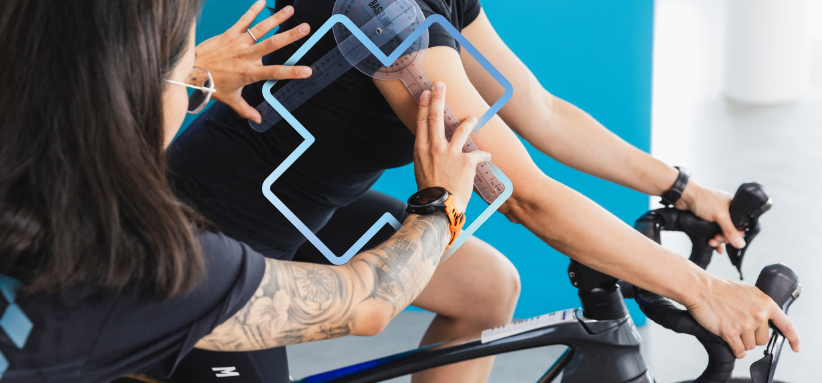
What is bike fitting in physiotherapy?
This service is intended for all types of cyclists who want to improve their posture on the bike, whether they ride a hybrid city bike, road bike, gravel bike, triathlon bike, or mountain bike.
Regardless of skill level or experience, all cyclists can benefit from bike fitting to improve comfort, performance, and injury prevention.
Reasons for consultation:
- Relieve cycling-related pain
- Improve performance
- Prevent injuries
How does a session work?
A cyclist evaluation and positioning session includes several steps and generally lasts between 90 and 120 minutes, with your bike in the clinic:
- A subjective assessment to discuss expectations, goals, and cycling history
- A general musculoskeletal evaluation
- Bike measurements
- Bike fitting and required adjustments
- Delivery of a technical summary and an exercise program
- An insurance receipt for physiotherapy provided at the end of the session
Biomechanical assessment and cyclist positioning
The standard biomechanical assessment in physiotherapy aims to identify the source of any pain or physical limitation that may affect cycling, such as hip stiffness, reduced hamstring flexibility, or a lack of stability in the lumbar region.
Cyclist positioning allows your physiotherapist to assess:
- Whether bike components are suited to your body type (saddle width, handlebar width, stem length, etc.)
- Whether your bike is properly adjusted (saddle position, cleats, hoods, etc.)
- Whether physical limitations identified during the biomechanical assessment affect your comfort and position on the bike
The evaluation includes a treatment plan that may involve personalized on-bike and off-bike exercises, mechanical bike modifications, advice, and, if needed, follow-up physiotherapy sessions in the clinic.
Frequently asked questions
Does insurance reimburse the cycling positioning assessment?
Yes, if your insurance covers physiotherapy, you will get reimbursement since this service is provided by physiotherapists.
How long does a cycling positioning assessment take?
A cycling evaluation and positioning session generally lasts between 1h30 and 2h.
What should I bring to the appointment?
- Fitted cycling clothing, including shorts if possible, for your comfort during positioning (avoid loose clothing to facilitate observation)
- Your bike
- Your cycling shoes
What is the ideal cyclist position?
During a bike fitting session, certain basic guidelines are generally followed:
- Greater weight distribution toward the rear of the bike, at the saddle
- A knee angle of approximately 32 to 42 degrees at the lowest point of the pedal stroke
- A shoulder angle of about 90 degrees when the hands are placed on the brake hoods
- A trunk angle at the lumbar region between 50 and 60 degrees for a road bike, around 60 degrees for a hybrid or city bike, and a more forward-leaning position (45 to 50 degrees) for a triathlon bike
These measurements are general reference points. A clinical evaluation with your own bike, performed by a bike fitting professional, always remains the best option.
What distance should there be between the saddle and the stem?
This distance depends on the size of the bike and the cyclist’s body proportions. There is therefore no universal standard.
What is the 75/25 rule in cycling?
It generally refers to dedicating about 75% of training time or rides to zone 2, and the remaining 25% to higher-intensity training.
Which strengthening exercises are recommended for cyclists?
Commonly recommended exercises include dead bug, Bulgarian split squat, bird dog, and glute bridge.