1. Use your legs, not your back
You’ve probably heard this classic ergonomic advice before: bend your knees and lift with your legs, not your back. Maintaining a slight arch in your lower back while relying more on leg strength reduces the strain on your lumbar region during heavy lifting. And let’s be honest, there’s a lot of lifting to do during a move!
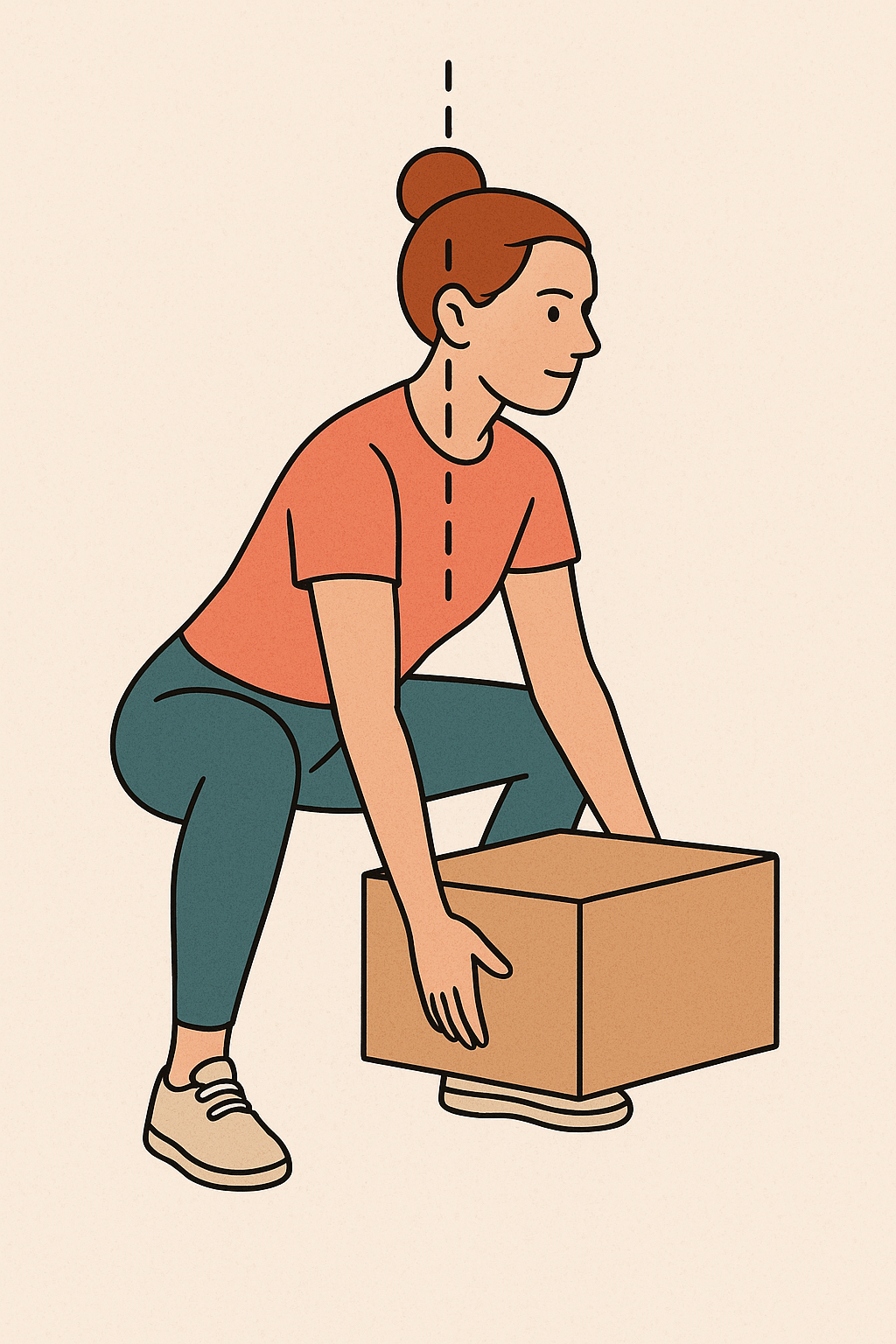
Image generated with ChatGPT.
2. Watch our for lighter objects
Don’t underestimate small items like tissue boxes or pens on the floor. Just because something is light doesn’t mean it can’t cause injury. Unlike during heavy lifting, our muscles are less alert in these situations, and we tend to forget to engage the abdominal muscles that help stabilize the spine. The #1 rule applies here too: bend your knees and use your leg muscles to pick things up.
3. Use a step stoll or ladder
When working at height, use a step stool or ladder. This helps avoid repetitive overhead arm movements that can cause muscle tension or pain in the shoulders and upper back.
4. Avoid repetitives movements
If possible, switch tasks regularly to engage different muscles and joints. This makes the work less taxing on your back. Another good strategy? Take more frequent (pizza) breaks!
5. Teamwork is key
Moves often happen at a fast pace, and the urge to get things done quickly may tempt you to lift heavy or awkward items alone instead of waiting for help. If you’re wondering, “Is this too heavy for me to carry alone?”, the answer is probably yes! Don’t hesitate to team up to lift bulky or hard-to-grip objects. And remember, good communication with your moving partner(s) is essential to prevent injury!
6. Use the right equipment
Using moving straps can help you get a better grip on heavy items, avoid awkward movements, and engage stronger muscle groups. You’re also less likely to drop something, an action that could cause injury if you try to catch or stop it.
About back support belts
Wearing a lumbar support belt doesn’t guarantee injury prevention, but it can provide some lower back support, especially if you already have a pre-existing condition in that area. Still, it's crucial to follow all the other recommendations. Proper ergonomics remains the most effective strategy!
Experiencing Pain? If you're feeling any discomfort, don’t hesitate to book an appointment with our team today.