
1. Gear up properly to take on winter
The equipment you choose can make all the difference between a comfortable run and an unpleasant (or even dangerous) experience.
Footwear suited to the conditions
- For snowy or icy trails: use traction cleats to improve grip and reduce the risk of slipping.
- For pavement: choose waterproof running shoes, such as those with Gore-Tex-type membranes, to keep your feet dry and help prevent frostbite.
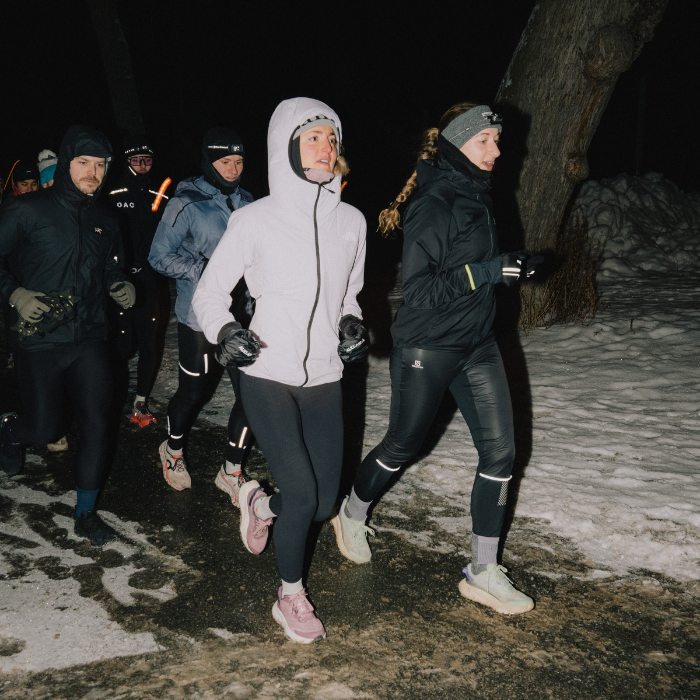
The layering system
Layering helps you stay warm while avoiding overheating and the buildup of sweat.
- Base layer: a fitted, breathable fabric (polypropylene or polyester) to wick away moisture.
- Mid layer: an insulating layer (merino wool or synthetic fabric).
- Outer layer: a breathable windbreaker or waterproof shell to protect you from the elements.
For your lower body, two layers are usually enough: an insulating layer and a windproof layer.
Must-have accessories
- Thermal socks to protect your feet from the cold.
- Warm mittens or gloves and a toque/beanie to limit heat loss.
- A neck gaiter or balaclava to warm the air you breathe and protect your face.
Preventing hypothermia
Watch for signs of hypothermia: persistent shivering, unusual fatigue, intense cold in the extremities, or signs of frostbite. If you notice any of these symptoms, it’s important to get indoors quickly to warm up.
2. Adjust your warm-up and cool-down
In winter, warming up and cooling down become even more important.
Warm up outdoors
Contrary to what you might think, it’s best to warm up outside. Warming up indoors can lead to excessive sweating; damp clothing can then increase how cold you feel and raise the risk of frostbite once you’re outdoors.
Tips for an effective winter warm-up:
- Extend your warm-up to help your body gradually adapt to the cold.
- Prioritize dynamic stretches and running drills.
- Avoid static stretching before your run, as it can increase injury risk and reduce performance.
Cool down indoors
After your run, head indoors for your cool-down. This allows you to stretch, gradually lower your heart rate, and avoid an excessive drop in body temperature.
3. Stay hydrated, even in cold weather
You may feel less thirsty in winter, but your hydration needs remain important.
Why hydration is still essential
In cold weather, the body focuses more on preventing frostbite and hypothermia, which can dull your sense of thirst. However, you still lose water, even if sweating is less noticeable.
Water or sports drinks?
In winter, electrolyte needs are generally lower. It’s best to prioritize water, unless you’re doing prolonged efforts where a sports drink may be helpful.
Practical tips
- Bring a water bottle, since outdoor park fountains are often turned off in winter.
- Take regular sips in small amounts rather than drinking large quantities all at once.
In short, winter running is absolutely doable (and beneficial!) as long as you dress appropriately, adjust your warm-up routine, and don’t overlook hydration. With these best practices, you can enjoy your winter runs while reducing the risk of injury and discomfort.
To learn more about winter running and possible related injuries, visit the Ordre professionnel de la physiothérapie du Québec.