Can you put a baby in a standing position?
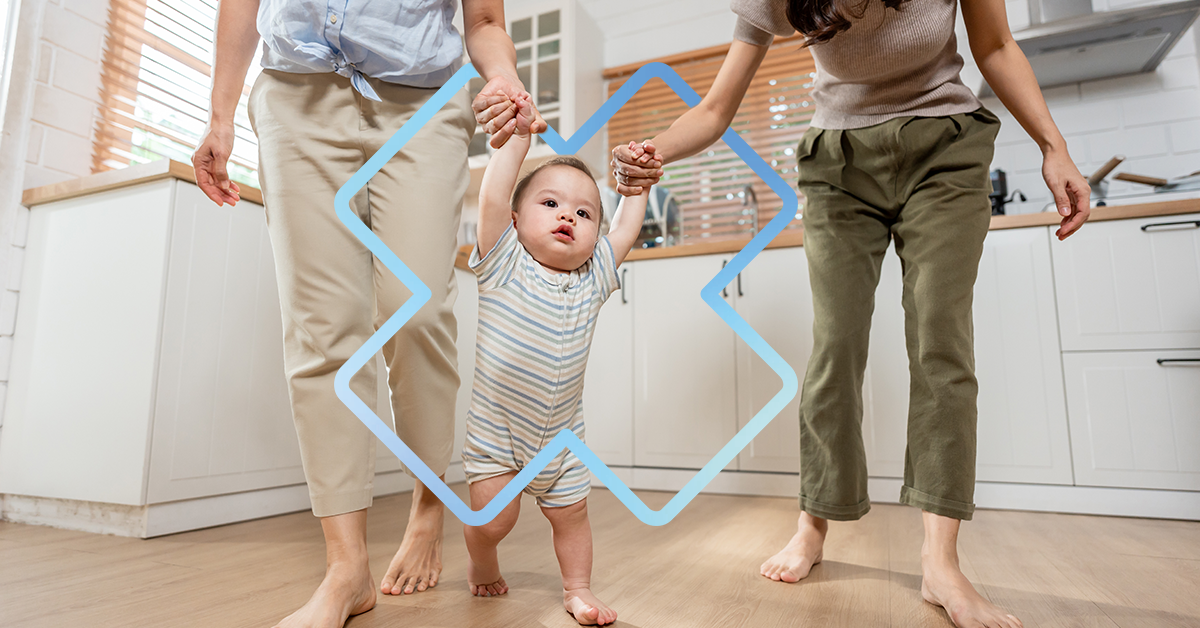
Almost all parents have experienced or will experience the moment when someone holds their baby upright on their lap and says, “Look how strong they are!” This often raises an important question: is it good for my baby to be placed standing so early? Will it help them walk faster?
The main recommendation in pediatric physiotherapy is not to actively encourage the standing position until the child can get into it independently. In practical terms, as long as your baby is not crawling on all fours and pulling themself up on furniture, it is not recommended to place them in a standing position.
This stage usually occurs between 9 and 11 months. Before this age, it is not necessary to position your child standing.
The goal is to respect natural motor development and avoid skipping important stages. To develop properly, your baby needs to go through all milestones: lying on their back, tummy time, rolling, sitting, moving on the floor, crawling on all fours, changing positions, and eventually standing.
The objective is not for your baby to walk as early as possible, but to acquire all the necessary prerequisites for walking, even if it happens around 15 or 16 months.
Working on the standing position too early can even hinder motor development. This position mainly activates back muscles, while floor positions strengthen the abdominal muscles, which are essential for postural control. An imbalance may develop and delay stages such as sitting or crawling.
Exersaucers and Jolly Jumpers: good or not?
For the same reasons, it is strongly recommended to limit or even avoid devices such as exersaucers and Jolly Jumpers. This is especially true if your baby tends to arch backward, stand on their toes, or dislikes tummy time or crawling.
Although these devices are popular with both parents and babies, they do not stimulate motor development. They mainly allow the baby to stay upright without effort, which limits important motor learning.
It is preferable to use a playpen with toys to provide a safe space where your baby can explore freely.
That said, moderation is key. For a baby who moves a lot on the floor and shows no particular tendencies, a short 5 to 10 minutes session in an exersaucer will not have a negative impact. It is important, however, to ensure that their feet are flat on the ground and their knees are bent.
If you do not already own one, it is generally not necessary to purchase an exersaucer.
Read our article about baby accessories.
Should you help your baby stand?
As long as your baby is not crawling on all fours, it is not recommended to encourage the standing position. A child who is developing normally will stand up independently once earlier milestones are achieved.
It is also not necessary to make your baby walk by holding their hands until they are able to move along furniture on their own. The goal is to promote independence in their movements.
When should you be concerned?
Some children may experience delays in their motor development and require support. Typically, a baby will stand between 9 and 11 months after beginning to crawl on all fours.
If a child is not crawling around 10–11 months and is not pulling to stand between 11 and 12 months, a physiotherapy evaluation may be recommended.
This step helps identify possible causes and support the child in developing the necessary skills to eventually stand and walk independently.
Do you have questions about your child’s motor development? Consult a pediatric physiotherapist for personalized, reassuring guidance.