
Defining the terms
Before comparing these two conditions, it is important to clearly define the terms.
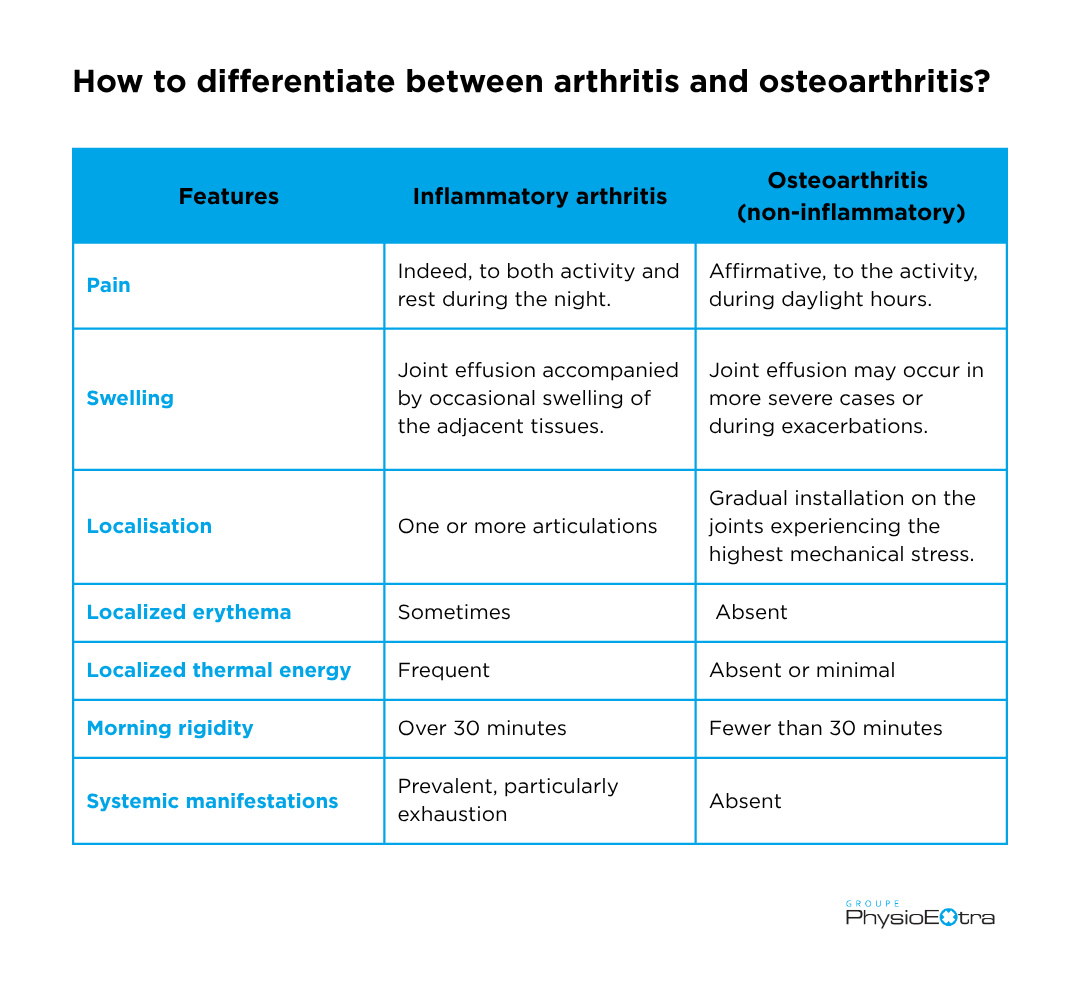
Arthritis is a term that encompasses more than 100 diseases characterized by inflammation of the joints and sometimes other parts of the body. The roots of the word come from “arthro,” meaning joint, and “itis,” meaning inflammation.
Osteoarthritis is one of the conditions within this broader category known as arthritis. It is the most common form.
Osteoarthritis
Osteoarthritis refers to the gradual breakdown of joint cartilage and the underlying bone. Normally, our body regenerates by repairing the microdamage caused daily to our tissues through regular activities. Osteoarthritis develops when this repair capacity becomes insufficient to compensate for wear and tear.
This creates an imbalance between wear and repair, which gradually leads to the deterioration of cartilage and bone. This process can cause pain, stiffness, and sometimes inflammation.
Certain factors can accelerate this degeneration, even during everyday activities, including:
- An unusual joint shape, such as genu varum
- A previous joint injury, such as a fracture or sprains
- Body weight, which influences the mechanical load placed on the joints
Signs of knee osteoarthritis are found in approximately 70% of people aged 70. However, the majority of these individuals do not experience knee pain, demonstrating that it is possible to have osteoarthritis visible on imaging without symptoms.
Stages of osteoarthritis
- Suspected: minor degenerative changes, usually without pain
- Mild: appearance of osteophytes and early cartilage wear
- Moderate: cartilage fissuring
- Severe: cartilage loss with bone-on-bone contact
Inflammatory arthritis
Most forms of inflammatory arthritis are autoimmune diseases. The immune system mistakenly attacks healthy joint tissues rather than an external threat.
Inflammation usually occurs in flares and causes damage more rapidly than osteoarthritis, since the joint itself is directly targeted. The most common forms include:
- Juvenile arthritis
- Rheumatoid arthritis
- Ankylosing spondylitis
- Psoriatic arthritis
- Gout
Because of the confusion surrounding the use of the term osteoarthritis, the word arthropathy has been proposed to describe a group of conditions causing pain, stiffness, and sometimes joint swelling.
Management and treatment
When the nature of symptoms is uncertain, a clinical examination, imaging, or blood tests can help confirm whether inflammatory arthritis is present.
Management of inflammatory arthritis generally involves medication, adopting healthy lifestyle habits, pain management strategies, and maintaining physical activity between flare-ups.
For osteoarthritis, although existing damage is not reversible, several strategies can help improve symptoms and slow progression:
- Weight management
- Maintaining physical activity
- Muscle strengthening
- Postural correction
- Effective pain management strategies
During flare-ups, a temporary increase in pain, warmth, or swelling may occur for 24 to 48 hours.
Read our article on the benefits of walking for osteoarthritis.
A health professional, such as a physiotherapist or an osteopath, can help you choose appropriate physical activities, learn targeted exercises, and manage symptoms to reduce the mechanical load on your joints.
When conservative approaches are no longer sufficient, joint replacement surgery may be considered. Proper physiotherapy preparation can help facilitate postoperative recovery.
Sources: