
Side effects of smoking
We know that smoking has harmful effects on multiple systems in the human body and contributes to the development, persistence, and worsening of many health conditions.
In addition to increasing the risk of cancer and cardiovascular and pulmonary diseases, smoking promotes a pro-inflammatory metabolic state. The byproducts of cigarette combustion create oxidative stress that sustains inflammation. This state hinders the healing of conditions such as tendinopathies, bursitis, or fractures.
The reduced oxygen transport in the blood also leads to poorer nutrition of healing tissues, which slows recovery. Additionally, a pro-inflammatory state is associated with increased pain intensity.
But what about the short-term effects of quitting smoking on the body? What are the potential benefits for pain, healing, and tissue adaptation during a musculoskeletal injury?
3 types of nicotine dependence
Quitting smoking is not an easy task. Cigarettes create a real addiction that manifests in three main forms.
Physical dependence
Nicotine is the active component in tobacco responsible for physical dependence. It stimulates the brain by triggering the release of endorphins, which are associated with a sense of well-being. Over time, the brain becomes dependent on nicotine to produce these endorphins, leading to increased smoking to recreate this effect.
Endorphins are also naturally produced through physical activity. This explains why moving can temporarily reduce the urge to smoke, although it is not sufficient on its own to counter withdrawal symptoms.
Psychological dependence
Because of the endorphins produced when nicotine is consumed, the brain quickly associates smoking with a feeling of well-being. Smoking may seem to reduce anxiety, boredom, or stress, but in reality, it mainly alleviates withdrawal symptoms caused by nicotine deprivation. This association reinforces the habit and makes quitting more difficult (Lung Association of Québec).
Social dependence
Smoking is also associated with moments of conversation and social interaction. For example, it’s easy to break the ice by asking a stranger “Do you have a light?”, and frequent gatherings in smoking areas create social bonds. These connections can be difficult to maintain after quitting, as constant exposure to smoking can trigger relapse. Addressing the topic with people around you who smoke can help ease the transition (Government of Canada).
Smoking and pain
Research demonstrates a clear link between smoking and pain. Smoking is a risk factor for several painful conditions.
- It increases the likelihood of experiencing low back pain (lower back pain), partly due to tissue degeneration linked to poor nutrition.
- It may also increase the prevalence of migraines.
- It may have a short-term analgesic effect related to its action in the brain, but this effect is far from sufficient to compensate for its negative impacts.
- It sensitizes the peripheral nervous system, and nociceptive thresholds in smokers (and those exposed to secondhand smoke) tend to decrease (compared to non-smokers), increasing pain reactivity and perceived pain (learn more about pain sensitization).
- It is an important factor in the chronicity of pain. Certain areas of the brain show increased connectivity that supports addictive behaviors and persistent pain.
In the long term, repeated activation of the endocrine system related to smoking reduces its efficiency. This system plays a role in pain modulation, which explains why smokers experiencing pain often consume more analgesics, including opioids, to achieve comparable relief.
Ways to quit smoking
There are several strategies to support smoking cessation, with or without medication. Nicotine withdrawal can lead to symptoms such as dizziness, difficulty concentrating, anxiety, headaches, or sleep disturbances.
Nicotine replacement therapies with controlled release can reduce withdrawal symptoms and significantly increase the chances of success. There are also non-nicotine prescription medications available.
A doctor or pharmacist can help you determine the option best suited to your situation.
Acupuncture: a helpful ally for quitting
Acupuncture is a complementary approach that is valued for supporting people who wish to quit smoking. By stimulating specific points, often in the ear (through protocols specifically developed for addiction), it acts directly on the nervous system.
- Reduce cravings: acupuncture promotes the natural release of endorphins by the brain, helping replace nicotine’s biochemical stimulation and providing a sense of well-being essential during the quitting process.
- Manage withdrawal symptoms: treatments help calm the sympathetic nervous system, significantly reducing anxiety, irritability, headaches, and insomnia during the first few weeks.
- Support detoxification: in traditional Chinese medicine, certain treatments are used to support healthy lung function.
While it does not replace personal motivation, acupuncture can make the physical and psychological withdrawal process more manageable.
Effects of smoking cessation
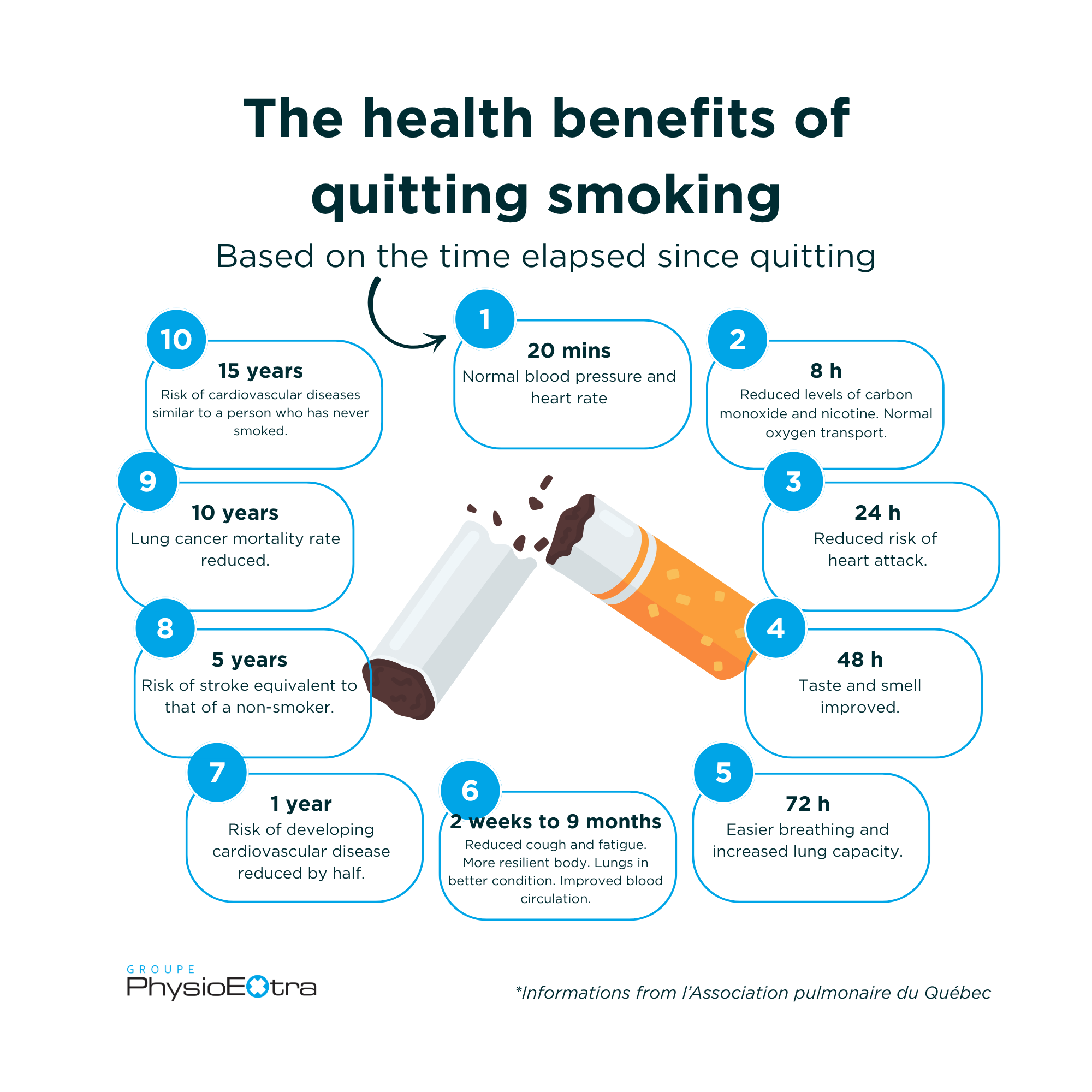
Quitting smoking provides numerous health benefits, despite initial withdrawal symptoms. Improvements in overall health are long-lasting and even more significant when cessation occurs earlier in life. As early as the first 20 minutes, quitting smoking already has positive effects on your body (see the infographic below).
Healthcare professionals can support you at every stage of the process and guide you toward appropriate resources. Don’t hesitate to contact us if you have any questions.
Available Resources
- I QUIT – Support and guidance services to help you quit smoking or vaping
- Smoking Cessation Centers – for in-person support
- Telephone service : 1 866 JARRETE (1 866 527‑7383)
- Online support I QUIT
- Text Messaging Service to Quit Tobacco (SMAT)
- Québec Without Tobacco Website
- Quit to Win Challenge
- Nico-Bar Website
- Smoke-Free Families Website
- De Facto Website
- Nicotine Withdrawal / Pain After Quitting | NICODERM®
Certain pharmaceutical products that can help with smoking cessation are covered by the public prescription drug insurance plan. To learn more, consult the section on tobacco cessation products on the following page: Learn about the plan’s coverage conditions, on the Régie de l'assurance maladie du Québec (RAMQ). website.