#1 - The saddle
The height, tilt and fore-aft position of the saddle have a significant impact on the health of the back, hips and knees.
Too high or too low
A saddle that is too high can create excessive tension in the posterior muscle chain of the pelvis and legs, cause side-to-side pelvic movement, or lead to an overly forward-leaning position. This may result in discomfort in the lower back or in the perineal area.
On the other hand, a saddle that is too low places more pressure on the knees and reduces pedaling power.
Too far forward or backward tilt
Back and pelvic posture are also affected when the saddle is tilted too far forward or backward. This is a key adjustment addressed during a bike fitting assessment in physiotherapy, as rider stability on the saddle is essential.
Too far forward or too far back
A saddle that is positioned too far forward increases pressure on the knees, while a saddle that is too far back reduces pedaling efficiency.
The adjustment to make
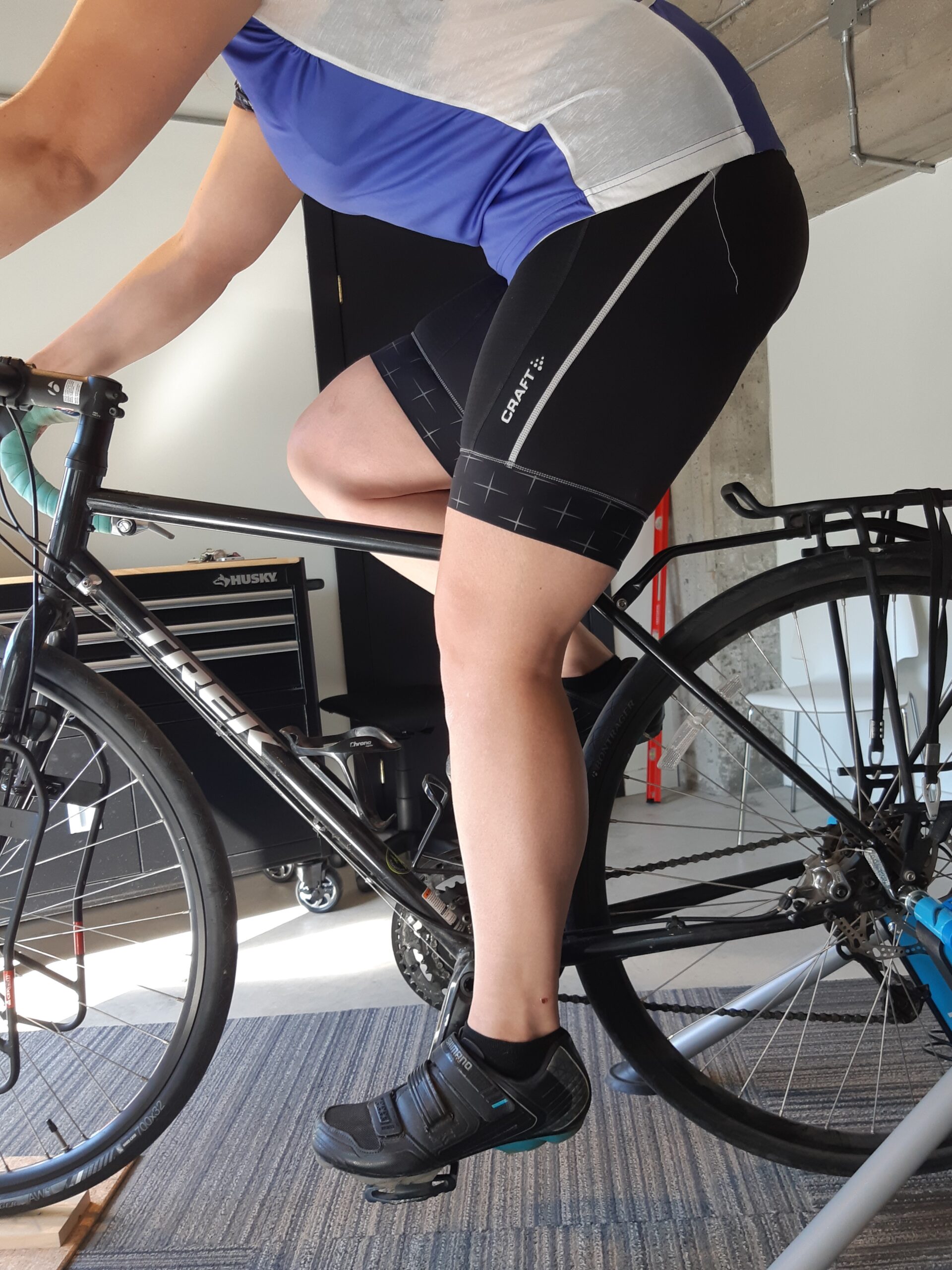
Place the crank at its lowest point and sit on the saddle with your hands on the handlebar. When the front of the foot is on the pedal, the knee should be slightly bent, between 30 and 35 degrees. For most cyclists, saddle tilt should be between -2 and +2 degrees.
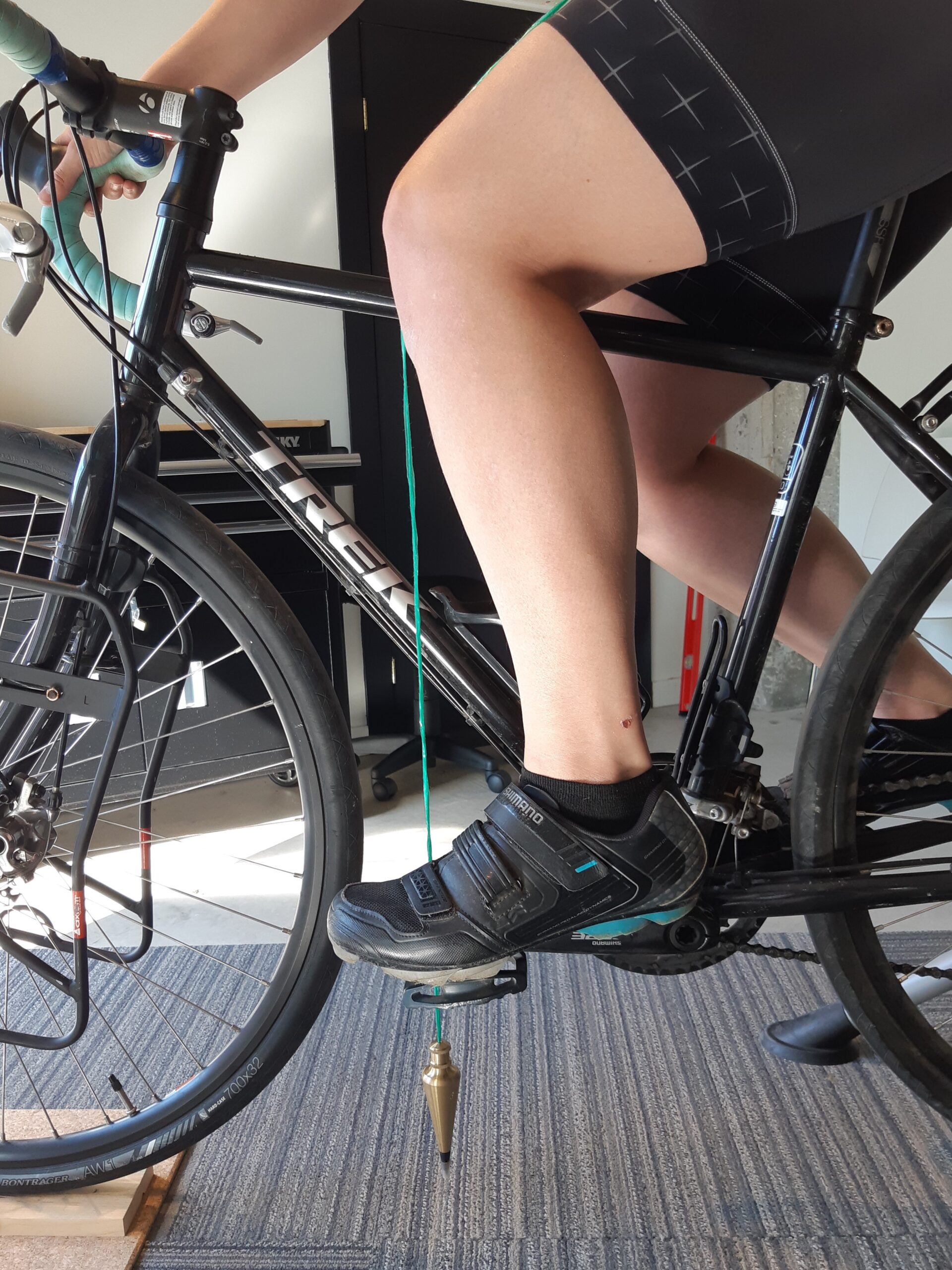
Next, position the crank horizontally and forward, keeping your hands on the handlebar. The front of the kneecap should be directly above the pedal axle. To check this, use a string with a weight at the end. Hold the string at the front of the kneecap and adjust the saddle position so the string aligns with the pedal axle.
YOU
KNOW? We offer bike fitting assessments in physiotherapy at several clinics.
#2 - The handlebar (cockpit drop)
What is cockpit drop?
Cockpit drop refers to the height difference between the top of the saddle and the handlebar. For example, a drop of -2 cm means the handlebar is positioned 2 cm lower than the saddle. There is no universal standard. This adjustment mainly depends on leg length and saddle height.
Handlebar height directly influences riding posture. It is generally recommended to keep spacers under the stem initially and consult a bike fitting expert to determine whether the cyclist has the functional capacity to lower the handlebar.
Too high or too low
A handlebar that is too low places the back in a very horizontal position, increasing load on the hands, elbows and shoulders, as well as pressure at the front of the perineum. A handlebar that is too high promotes a more upright posture and may increase stress on the lower back due to repeated road vibrations.
A handlebar at the same height or slightly lower than the saddle allows for better weight and vibration distribution. Comfort should always come first.
The adjustment to make
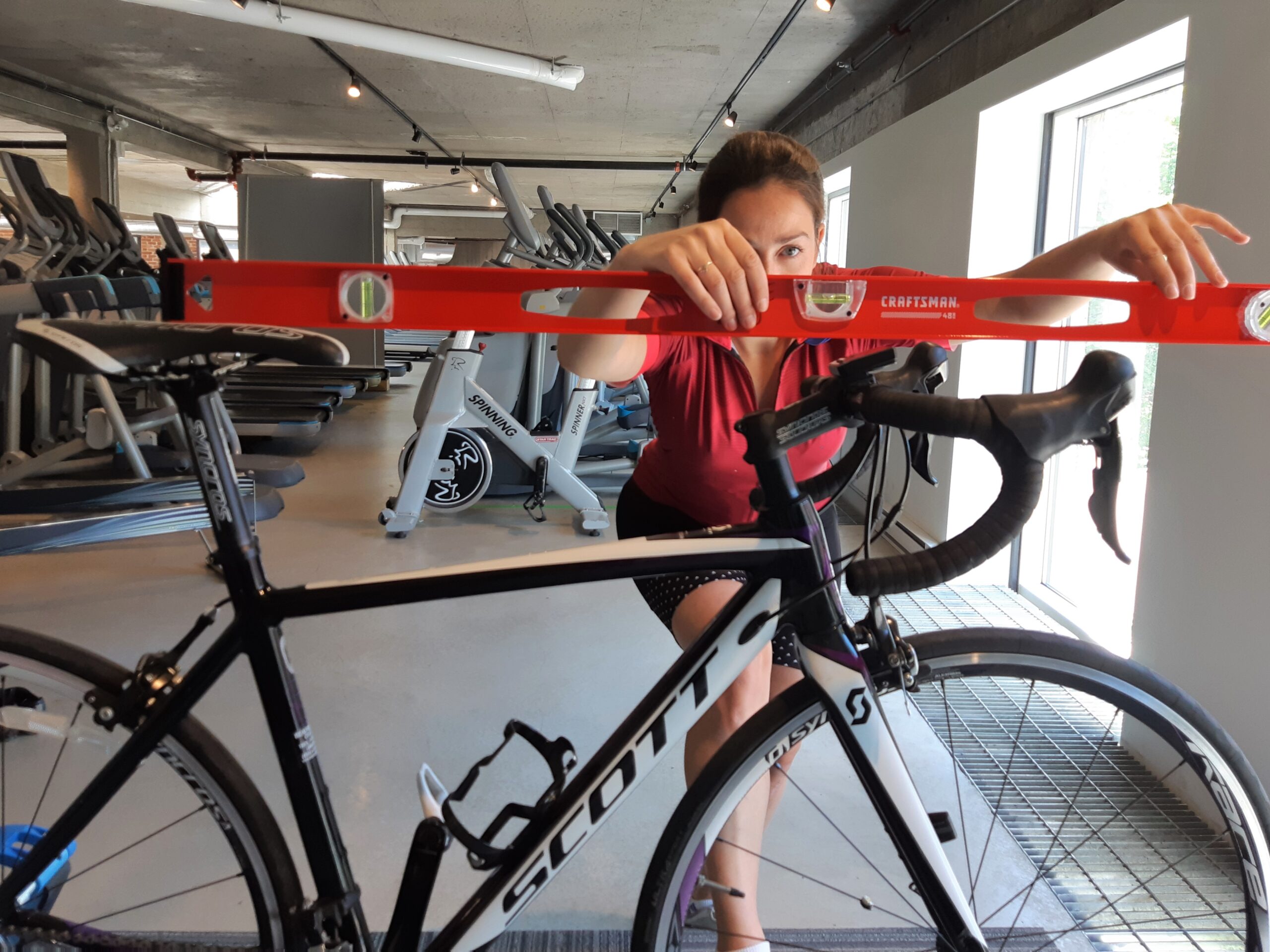
Using a level placed horizontally on the saddle, measure the vertical distance to the handlebar.
- More experienced cyclists may aim for a drop of 50 to 90 mm.
- For recreational cycling, aim for 0 to 50 mm lower than the saddle.
- For short, occasional urban rides, a handlebar higher than the saddle is recommended.
#3 - Ideal posture
Even with a well-adjusted bike, it is important to consciously adopt good posture and healthy riding habits.
Ask another cyclist to observe you from the side. Does your pelvis look stable on the saddle? Are your elbows too straight? Does your back appear overly rounded or arched?
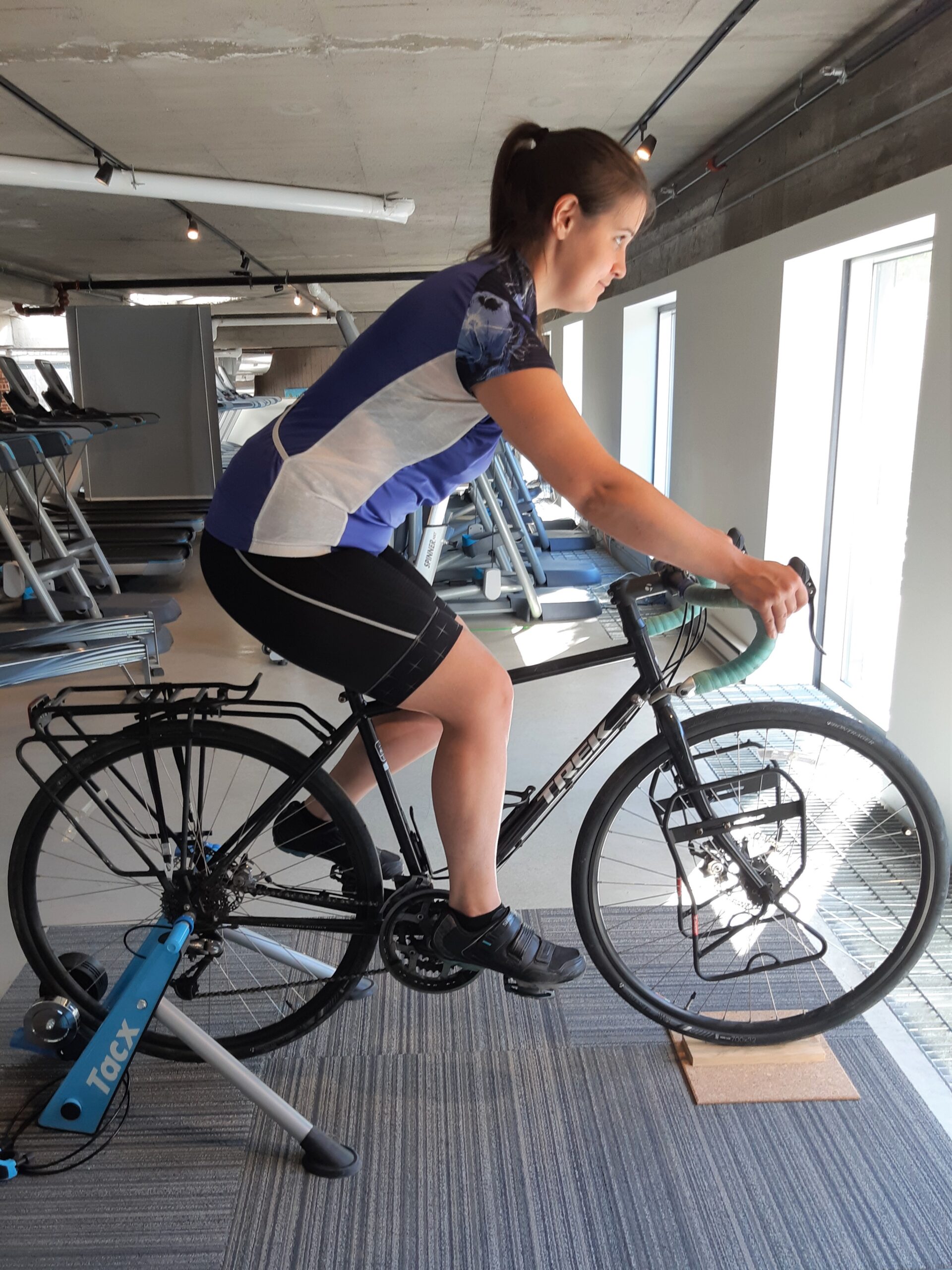
The goal is to have more weight on the saddle than on the hands and to feel stable while seated. Avoid sliding forward on the saddle.
Varying hand positions and straightening the back from time to time helps distribute load and reduce joint stress. Prolonged positions can irritate the body. Taking breaks also encourages a more upright posture.
Finally, congratulate yourself for choosing a more active lifestyle. By taking these precautions, you greatly increase your chances of cycling without pain.
Enjoy the ride... and do not forget your helmet !
Extra tip - How to properly adjust your BIXI bike
Public rental bikes such as BIXI are very popular in Montréal and across Québec. To avoid discomfort, it is important to properly adjust the saddle height.
Place your heel on the pedal and bring it to its lowest point. Your leg should be fully extended without your pelvis tilting. This method provides a simple and effective approximation for comfortable and safe riding.
@physio.extra Y fait beau, y fait chaud... On sort son BIXI ! 🚴♀️ Laurence, physiothérapeute experte en positionnement cycliste, te montre comment ajuster ta selle afin de prévenir les bobos. ☺️ ... Sans oublier le casque! Bon vélo ☀️ #bixi #mtl #ete #velo #physio @BIXI
Have questions or want your bike adjusted in clinic? We offer cycling positioning assessment in physiotherapy. Book your appointment today.