
The biggest and longest nerve in the human body, the sciatic nerve is formed by the combination of the nerve roots that exit from the lower lumbar spine and the upper sacral spine. As the figure below shows, its territory extends from the lower back to the foot.
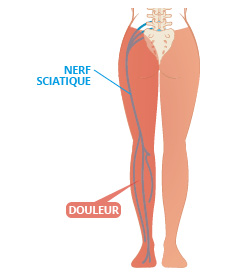
What are the symptoms of sciatica?
- The most common types of pain described include:
- a feeling of stiffness in the leg;
- a burning sensation or electric shocks in the leg;
- symptoms that often extend below the knee, in the case of true sciatica;
- tingling, pins and needles, or numbness in the part of the leg innervated by the sciatic nerve;
- loss of sensitivity in part of the leg and/or loss of muscle strength in specific muscles.
What are the causes of sciatica?
- An injury to the intervertebral disc (the spongy cushion that acts like a shock absorber between two vertebrae) or irritation of a joint in the lumbar area (a stiff joint, for example) can cause localized inflammation. This inflammation can compress the nerve roots, leading to the symptoms listed above.
- In more rare cases, tightness or inflammation of a muscle in the buttocks, called the piriformis, can also lead to compression of the nearby sciatic nerve.
- Symptoms can also appear if a portion of the sciatic nerve becomes entrapped by adhesions. Nerves are not overly stretchy structures. As our body goes through its regular motions, the nerves must be able to slide freely through the various structures along their routes. For this reason, sciatica can also appear when a section of the nerve is unable to move freely.
- When people experience pain in the back of the leg, the blame very often gets pinned on the sciatic nerve. But it’s often not the real culprit, with the pain actually being caused by something else, for example, a problem with a pelvic joint or pain originating from a joint in the lumbar area, without the nerve itself being affected. A muscle or joint problem in the leg can also mimic symptoms that are strangely similar to sciatica.
What are the treatments?
- When the pain is at its worst, it’s important that you consult your doctor or pharmacist, who can recommend medication to reduce the inflammation and relieve any muscle spasms you may be having, which can also make the symptoms worse.
- Because sciatica is a very complex problem with a range of possible causes, unfortunately there is no universal solution. If the symptoms persist, it’s important to consult your physiotherapist, who will be able to identify the cause of your symptoms and prescribe appropriate exercises and treatments.
- In very rare, very severe cases, surgery may be needed, although this is the exception to the rule.
To sum up, sciatica is a multifaceted problem that often requires a more in-depth assessment, but that usually responds well to physiotherapy once the cause has been identified.