Going barefoot first!
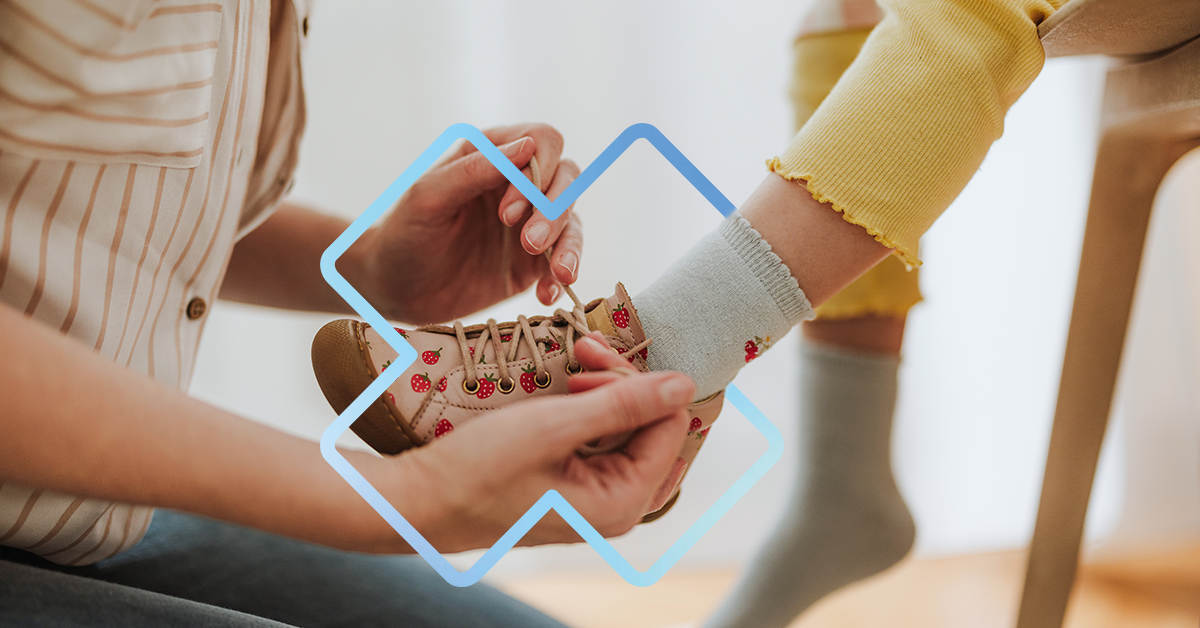
All parents eventually ask themselves the question when their child begins to stand and move: what type of shoes should I choose? Contrary to some beliefs, rigid boots are not recommended.
Scientific literature, the Canadian Paediatric Society and the American Academy of Pediatrics instead recommend going barefoot, especially at a young age.
When shoes become necessary outdoors to protect the feet, they should be:
- Flexible
- Without arch support
- Equipped with a non-slip sole
The more flexible the shoe, the better it respects the foot’s natural movement.
According to your child’s development
Child moving on the ground
Shoes are unnecessary and can even hinder mobility. Their rigidity limits ankle and toe movement, which can slow motor development. It is therefore recommended to let your child go barefoot. This helps them learn to use their toes to grip the ground.
Child starting to stand
Going barefoot or wearing non-slip socks remains the best option to support foot muscle development. A boot acts like a crutch that prevents muscles from working to their full potential; it is therefore not recommended.
It is normal for a child who is starting to stand to have flat or collapsed feet. Through standing and experimenting, the muscles strengthen and the arch develops naturally.
Going barefoot also helps your child better feel surfaces and textures, improving proprioception and their ability to adapt to their environment. A rigid shoe, on the other hand, slows these sensory signals.
Shoes may be used outdoors to protect the feet from cold or hot surfaces, favouring simple, very flexible models.
Note that in some cases, more supportive boots may be recommended by a pediatric physiotherapist. This is usually for specific situations such as motor development delay and/or hyperlax or poorly aligned feet.
Child who walks
Indoors, going barefoot or wearing socks is still recommended.
Outdoors, shoes are mainly used to protect the feet from potentially dangerous surfaces and objects (small rocks, hot surfaces, etc.).
Recommendations may vary for children with motor challenges. A pediatric physiotherapist will be able to guide you based on your child’s specific needs.
What makes a good shoe?
A good shoe should mimic the bare foot as much as possible.
It must be:
- Flexible
- Have a thin sole, close to the ground
- Non-slip
- Allow about 1 cm of space between the longest toe and the tip of the shoe (while standing)
Walking boots are generally not necessary, as they provide excessive support that the foot does not need to develop.
Light-up shoes should also be avoided, as their soles are often too rigid and too thick.
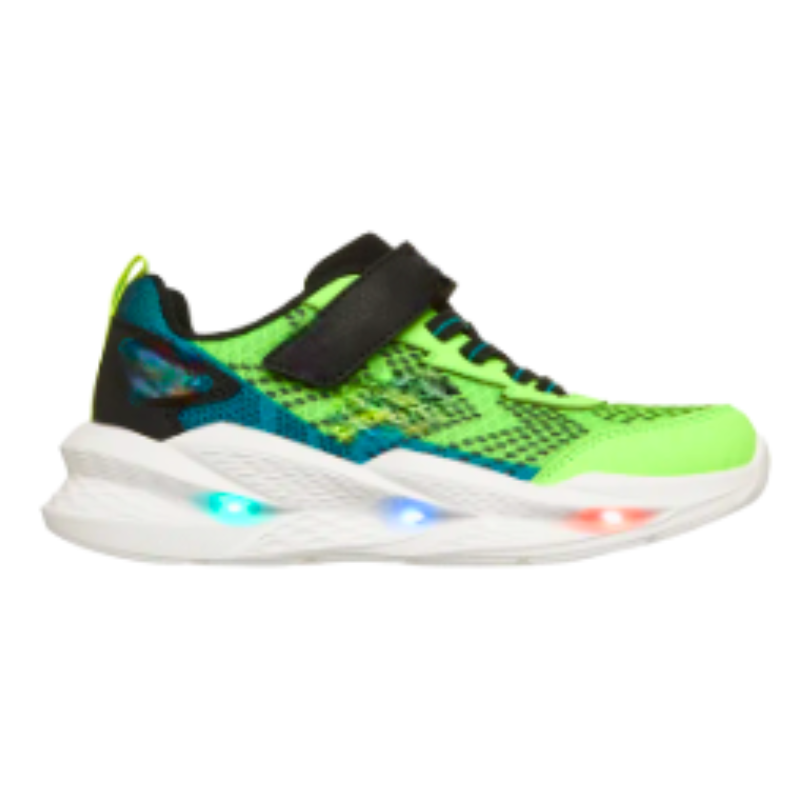
As children grow, shoes should adapt to their activities and sports, while still encouraging barefoot time at home.
What budget should you plan for?
Price is not a reliable indicator of quality. What matters most is respecting the essential criteria.
It is possible to find suitable shoes at a low price. Since children’s feet grow quickly, investing in very expensive models is not always necessary.
For more intense sports, specialized shoes may be required and will be more expensive.
Used shoes: a good idea?
It is possible to use previously worn shoes, provided you check:
- No visible deformation
- The condition of the outer sole
- The possibility of cleaning or replacing the insole
- The integrity of the internal structure
When should you change shoes?
Children’s feet grow quickly:
- Before 18 months: more than half a size every 2 to 3 months
- Between 18 months and 3 years: about one size every 8 months
- After 3 years: about one size per year
It is recommended to check your child’s shoe size at least once per season.
How to measure your child’s feet
At home
- Have your child wear their usual socks
- Place a sheet of paper on the floor and have your child stand on it
- Draw a line at the heel and at the longest toe
- Measure the distance between the two
- Use the larger measurement of the two feet
- Add about 1 cm to choose the right size (and slightly more for winter boots)
In store
When a shoe has a removable insole, it becomes much easier to ensure a proper fit. Some models even include markings to indicate proper placement.
- Remove the insole if possible
- Have your child place their foot on it (while standing)
- Make sure the toes do not extend beyond the width
- Keep about 1 cm of space between the longest toe and the front of the shoe
What if my child wears SMOs or other orthotics?
Consult this website created by a physiotherapist specialized in pediatric rehabilitation. You’ll find all the information you need about shoes adapted for orthotic use.
Do you have questions about your child’s posture or motor development? Book an appointment with a pediatric physiotherapist for personalized guidance.