
What is carpal tunnel syndrome?
Carpal tunnel syndrome is a condition of the arm caused by compression of the median nerve within the carpal tunnel of the wrist. This compression most often occurs due to repetitive wrist movements, such as using a computer mouse or handling tools.
The main symptoms include pain or numbness in the palm, thumb, index, or middle finger. These symptoms are often more intense at night when the wrist remains bent or extended for long periods. Loss of strength and sensations of cold or burning in the hand may also occur.
@physio.extra Douleur à la main? C'est peut-être le syndrome du tunnel carpien. 🫣 Nicolas, ergothérapeute, vous en dit plus dans cette vidéo de notre nouvelle série "Pige un bobo". 🤕💙 Pour en savoir plus, consultez l'article de blogue via le lien en bio. #canalcarpien #ergo #physio #main #douleur
What can cause carpal tunnel syndrome?
Carpal tunnel syndrome is caused by compression of the median nerve in the carpal tunnel. Several factors can contribute to this compression.
Repetitive wrist movements
Repeated use of the wrist and hand, especially with a computer mouse or manual tools, can create friction within the carpal tunnel. Overworked muscles may become tense and increase pressure on the nerve.
Seated posture at work
Workplace ergonomics plays an important role in the development of carpal tunnel syndrome. A poorly adjusted workstation, with a forward head position, a low screen, rounded shoulders, or wrists held in extension, can contribute to nerve sensitivity.
Maintaining these postures for extended periods can create tension in the neck, shoulders, and upper back. When the median nerve is compressed in any of these areas, its mobility decreases, making it more vulnerable to compression at the wrist.
Previous wrist injury
A past wrist injury, such as a fracture or severe sprain, can reduce the space in the carpal tunnel and contribute to compression of the median nerve.
How can you prevent carpal tunnel syndrome?
For office workers, seated posture plays a key role in both prevention and treatment. The goal is to limit muscle and joint tension along the entire nerve pathway, from the neck to the hand.
It is recommended to avoid prolonged sitting by standing up at least once per hour and moving for a few minutes. Adopting a neutral wrist position, without angling it on the keyboard or mouse, and adjusting the screen to eye level are essential. Using a vertical mouse can also help maintain a neutral wrist position.
What can you do at home to relieve symptoms?
If symptoms are mild and intermittent, certain strategies can help reduce discomfort.
- Limit repetitive wrist movements by taking 1 to 2 minute breaks every 30 minutes.
- Monitor wrist position at the computer or while driving to avoid prolonged bending.
- Apply ice on the wrist for 15 minutes to relieve pain.
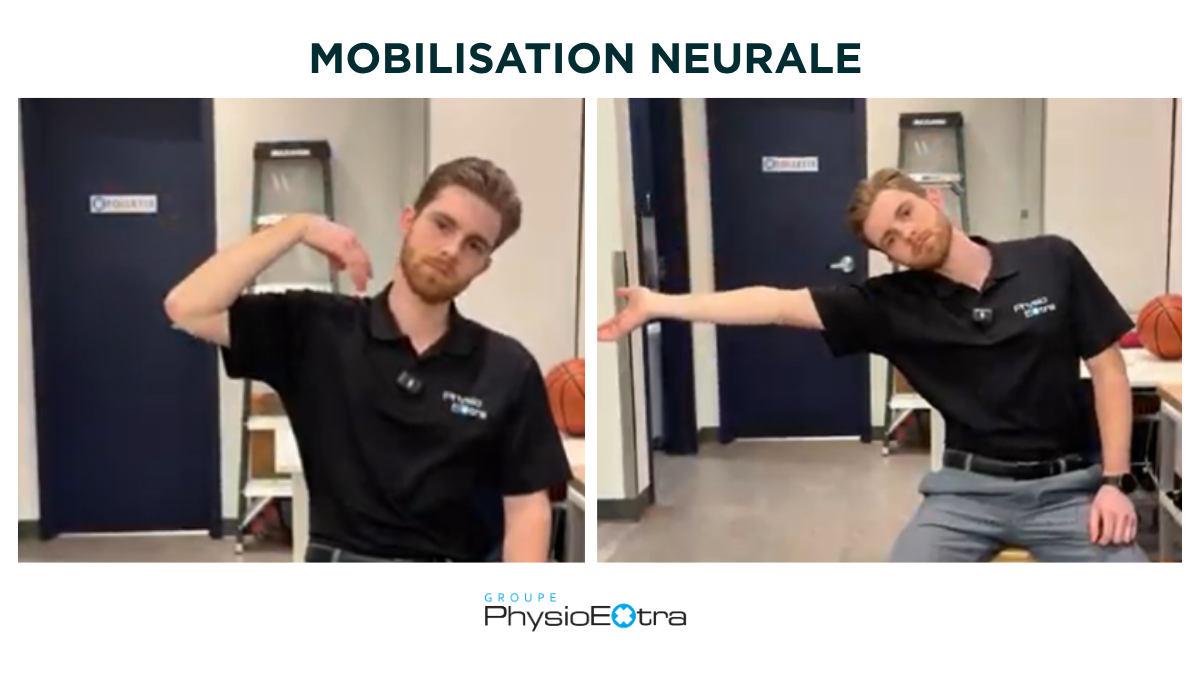
Joint and nerve mobility exercises may also be beneficial, depending on symptom severity. If exercises increase pain, it is recommended to consult a physiotherapist or an occupational therapist for a thorough assessment.
What treatments are available?
In most cases, physiotherapy is recommended. Treatments may include specific exercises, wrist mobilizations, neural mobilizations, and muscle release techniques in areas where the median nerve may be compressed.
Occupational therapy may also be relevant to help modify activities that contribute to symptoms. In some cases, wearing a rigid brace, especially at night, may be recommended to keep the wrist in a neutral position and reduce nerve compression. This brace can be made by an orthotist or occupational therapist.
For more severe or persistent cases, medical or surgical interventions, such as cortisone injections or decompression surgery of the median nerve, may be considered, but only after conservative treatment has failed.
If you experience numbness, loss of strength, or wrist pain that interferes with your daily activities, do not wait. Consult a healthcare professional in physiotherapy or occupational therapy for an evaluation and a treatment plan tailored to your condition.
Sources
- Saunders, R. J., Astifidis, R. P., Burke, S. L., Higgins, J. P., and McLinton, M. A. (2016). Hand and Upper Extremity Rehabilitation: A Practical Guide (4th ed.). Elsevier.